Monday, April 11, 2011

Xtranormal: Amateur Hour?

While I did ending up using the medium Xtranormal as part of my Textual Transformation Project, I do, however, have many problems with this new found form of animation as a medium to be taken seriously. One of my biggest critiques lies in the difficulty of conveying your (the author's) intended message to an audience. Simply, the majority of the time, you just can't. The program doesn't allow you enough freedom to do so, and in the end, you're stuck with slim pickins and forced to choose from a very limited array of options. This new medium is devoid of the elements which make film great (e.g. real actors-whether in front of the camera or doing a voiceover for animation, post-production editing, endless possibilities for set locations, etc.); essentially, the biggest flaw is the mere fact that this medium was intended for an armature-level audience, seeing as it’s basically a “do-it-yourself” kit for Web 2.0.

Obviously, this was Xtranormal's intention--to create a user-friendly animation medium that allows the average person to operate with no real difficulty--but I feel that it is also their Achilles Heal, the one thing really holding them back from entering the next phase of global media success (such as Facebook or Youtube). However, I suppose that the majority of internet users are, in fact, amateurs with regards to something like animation--but still, there's something really problematic with this medium, something that could be easily addressed and fixed in no time...ah, yes, of course, it's the acting (or lack thereof).

The actors speak with such blatant artificiality and awkward pronunciation that the whole production just seems, well, fake; their dialogue is akin to that of a robot, which I suppose in a way, they actually are. The dialect and accents available for your "actors" are very limited, only providing users with a few stereotypical options--like "American English Female 1" who, when choosing that option, repeats the phrase "You bet-ter bring it, girl-friend." Christ, they sound about as human as Arnold Schwarzenegger did in The Terminator.

On that note, another bothersome issue is the fact that you are only able to choose between 6 or so "settings," which, as you could have guessed, are very bland and boring. You can only have upwards of two "actors" on screen during the whole production and you cannot change "sets" once filming has began--for it has to remain static the whole time, which is ultimately how the entire medium is, static. Of course, all of these problems can disappear if you decide to pay more money and receive the "upgrade."

With this particular animation, it was very difficult because I attempted to recreate a musical scene from my Disney project. So not only did I have to include the awkward dialogue exchanges, but had to take the dialogue (which eventually evolves into a song and dance routine), place it into the program Final Cut Pro, download the instrumental version of the song, superimpose that into the animation, then convert that to a quicktime file, and upload that to Blogger. Talk about frustrating! And the hardest part about the whole process was aligning, to the best of my ability, the lyrics with the instrumental beat--trying to add just the right amount of "pauses" ("I'm thinking" or "I'm totally stumped") in between the actors' speaking lines as to have some coherent rhythm and tempo. A very, very tedious and time-consuming process for a video that's only 2 minutes long.

In retrospect, I find the entire Xtranormal medium to be quite frustrating, to say the least (especially if you're trying to make a music video!) While I was pretty aware of this before taking this project head-on, as I had used this program before, I wanted to create a sort-of experiment that explored the flaws and limitations of this medium. As such, I believe this is pretty damn good evidence that, in a lot of ways, it is far inferior to film or any other form of moving picture art. Don't get me wrong, I had fun putting the video together, but I simply believe that Xtranormal needs to undergo and serious transformation, an upgrade, something to rid themselves of this amateur stigma that has come to represent, in my eyes, the entire medium as a whole.

Now, enough from me...What do you guys think about Xtranormal? Do you think it will become extinct in the near future? Is it simply not good enough to live on? Do the problems with the medium outweigh the potential benefits (or vice-versa)? Please, feel free to post your comments, concerns, questions, rebuttals, what have you, below...

Textual Transformation Project--An Introduction

For the purposes of this project, I chose to textually transform my Disney creative project--a rendition of The Mickey Mouse Club--into a podcast, an Xtranormal animation, and a blog. The podcast consisted of me discussing all the facets of the actual project; writing the screenplay, finding the actors, finding shooting locations, building sets, gathering and purchasing props, directing, editing, and finalizing the whole thing into a flowing narrative. Then, with Xtranormal, I decided to recreate the "College Musical" segment of our Disney video using this program, which turned out to be quite a difficult procedure. And finally, for the blog, I chose to discuss what I feel are the biggest problems associated with Xtranormal as an artistically serious medium. Other than that, I think that's all the background info you need. Enjoy!

Collins Swords

Friday, February 11, 2011

A list of my picks:

Best Picture: The Social Network

Best Director: David Fincher (The Social Network)

Best Actor: Colin Firth (The King's Speech)

Best Actress: Natalie Portman (Black Swan)

Best Screenplay (original): Christopher Nolan (Inception)

Best Screenplay: Aaron Sorkin (The Social Network)

Best Supporting Actor: Christian Bale (The Fighter)

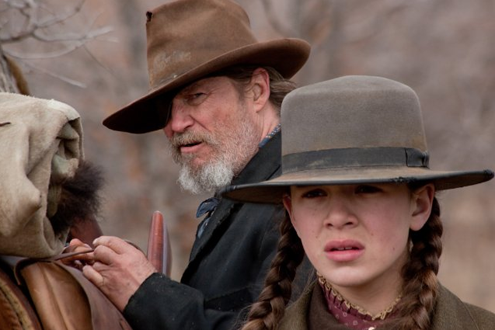
Best Supporting Actress: Hailee Steinfeld (True Grit)

Inception


Walking out of the movie theatre, my mind was blown after watching Christopher Nolan's highly imaginative and entertaining film Inception. The film was a great follow up to Nolan's acclaimed The Dark Knight, proving that the director refuses to become a product of Hollywood mediocrity. Aesthetically, this film is one to be emulated; like The Matrix, Inception creates a world of pure imagination, diving head first into the subconscious of its central characters, immersing the audience in a world where the lines between reality and fantasy are constantly blurring together. Leonardo DiCaprio leads this all-star cast in one of the most thrilling and entertaining movies I'd seen in theaters since I can remember.
However, looking back on the Oscar's past winners, Inception may be a film that's a bit too fantastic for the Academy--it lacks a certain element of realism necessary to take home the best picture award. Getting a summer theatrical release definitely hurts the film's chances even more, seeing as those films are typically forgotten once award's season comes around. While Inception is a great, mesmerizing, and entertaining film, I believe the subject matter is not appealing to voters for the big awards. Surely, it will sweep the categories in visual and audio effects, and maybe even cinematography; but other than that, I see the film going home empty handed. Think about it, did The Matrix win any significant awards? No, and if anything, this film primarily drew inspiration from that film. Both are great films, but simply, they are not in congruence with the Academy's tastes.

Thursday, February 10, 2011

True Grit


I had high expectations for the Coen brothers' new addition to the western genre, one that appears to be on verge of extinction, True Grit. While I was a bit disillusioned discovering that it was, in fact, a remake; nevertheless, I have complete faith in the Coen's work, and am willing to consume anything they produce. Perhaps this is why I was slightly disappointed after walking out of the film. Taken, it was a very good film (I mean, it got 10 Oscar nominations), but I felt short-changed and left unfulfilled. The directing and cinematography were, as always, excellent, the dialogue was spot-on, being culturally relevant for the times, Jeff Bridges and Hailee Steinfeld gave equally terrific performances; but still, something was missing. Maybe it was the grit that was nonexistent, save for one scene. I was shocked to find that the film received a PG-13 MPAA rating. In contemporary times, films that are the most realistic are the ones that are rated R. It's as simple as that (with the exception of Pixar films). Especially with the western genre, it's is only accurate to have the characters cursing, yelling profanities and suckin' down whiskey in filthy brothels.
Essentially, it has to resemble a show like Deadwood, where the grit is pervasive, but necessary in depicting the a culture akin to the "Wild West". The studio's decision to make True Grit available to a larger demographic is, ultimately, what I believe hinders the film most. This may be a small (and even ridiculous) critique, but I believe this missing element makes this film good, as opposed to great. As far as awards go, I predict it won't win much--Jeff Bridges just won last year for Crazy Heart, the Coen's just won for No Country for Old Men; maybe it will get Roger Deakins a best cinematography award and Hailee Steinfeld has a good chance at best supporting actress, but other than that, True Grit will go home empty handed.

Black Swan


The Academy always has a big problem of neglecting the more artsy/independent- esque films. But thankfully, the best picture nominations have recently been doubled from 5 to 10, allowing certain films, like Black Swan, an opportunity to run in the big leagues. Darren Aronofsky, the genius behind Requiem for a Dream and The Wrestler, has created a psychological thriller that stands alone among most of this genre.
Devoid of Aronofsky's typically stylized directing, this film is more of a character study of Nina, a troubled ballet dancer whose life has been completely devoted to dancing and achieving perfection in her craft. Played wonderfully by Natalie Portman, her role as Nina is one of the most haunting performances in recent memory, making you cringe and squirm in your seat as you watch her progression into insanity, becoming delusional and unaware of what is reality and what is in her mind. This film does a brilliant job of toying with the audiences' perception of reality within the film, thanks to Aronofsky's skilled and mature direction. It's shot in an almost documentary style, devoid of still shots, with hand-held camera work that seems to be intimately following the characters and their actions.
Unfortunately, Black Swan has little-to-no chance of winning best picture; this film is, simply, too artsy for the Academy's taste, not quite mainstream enough. At least they've finally recognized Aronofsky, who's gone his whole career without a hint of recognition. Now, hopefully, this film proves something--that independent films do stand a chance against the big studio productions.

The Fighter


One thing the Academy loves is the boxing genre--from Raging Bull to Million Dollar Baby, and now with The Fighter, films that center around boxing always seem to guarantee themselves a spot in the best picture category. The strongest aspect of The Fighter is certainly the acting, with strong performances from Mark Walberg, Melissa Leo, Amy Adams, but most importantly, Christian Bale, who plays a former boxing pro turned crack addict. Loosing nearly 100 pounds to fit the role, Bale gives a tour-de-force performance as Dickey Eklund, not only through his drastic physical transformation, but through his skill mastering the mannerisms and behavioral patterns of a man whose life was ruined by crack-cocaine. Bale became the character; he was the role. And, not to mention the other candidates for best supporting actor are mediocre at best, providing Bale with a really good chance at taking home his first, well deserved Oscar.
As for best picture, probably not happening. With Million Dollar Baby winning it only 7 years ago, the Academy will likely offer the award to a film devoid of the boxing theme. Sorry David O. Russel, bad timing I suppose. However, the original screenplay does have a chance, although its going to have a tough time competing against The King's Speech and Christopher Nolan's highly imaginative Inception.

The Social Network


In my humble opinion, this film has got it all: terrific acting (especially from the lead performances), top-notch directing, beautiful cinematography, and a nearly pitch perfect screenplay from Aaron Sorkin. Prior to seeing this film, Jesse Eisenberg seemed to be nothing more than a Michael Cera wanna-be--the skinny, white, overly passive teenager with an awkward, quirky sense of humor. However, after seeing him portray Mark Zuckerberg as a dark, manipulative, and lonely individual, I realized that, believe it or not, this kid's got talent. Period. The film depicts Zuckerberg as the arrogant boy-genius, a character destined to be hated by audiences--but he's not; thanks to Sorkin's witty, yet unflinchingly human script, we inevitably feel empathy for Zuckerberg, despite his unattractive nature.
Although Esienberg could easily get beat by the highly favored Colin Firth (The King's Speech), I believe that Aaron Sorkin is a shoe-in for the best adapted screenplay award. It plays almost like a contemporary Greek tragedy, digging deep at the core of human relationships--the lies and betrayal that result from money coming between two best friends. And as far as directing, I've always been a huge fan of David Fincher (Fight Club, Seven) and feel that his talent has been severely overlooked by the Academy for years. Essentially, his time is due for some recognition. Like Martin Scorsese's The Departed, The Social Network may not be Fincher's best film per say, but he's long over-due for a golden statue. For best picture, I'd have to say The Social Network is my pick, not a doubt in my mind.

Oscar Predictions

I've narrowed down the list of big Oscar contenders (in my opinion) for this years 83 annual Academy Awards. Unfortunately, I have yet to see the highly praised The King's Speech (sigh), so you will have to bare with my ignorance on that subject. Otherwise, I've seen everything I need to see this year. So let's get started.

Welcome!

Hello All-

Thanks for viewing my blog. I hope that I can generate some interesting discussions pertaining to contemporary film. With my blog, I hope to relay to you all news and reviews of this year's big Oscar contenders. I intend on focusing primarily on the Academy's more prestigious awards, such as Best Picture and Best Director, and provide you with a brief synopsis explaining the logic behind my decisions. I hope you all enjoy. And please, feel free to comment at the bottom of each post. I'd love to see what you all think!. Thanks.

-Collins Swords

Wednesday, April 21, 2010

Review: Crossroads Short Films (2nd block)

Head in the Sand and Chronicles by the Other
Comedy/drama/war and comedy/drama/love
Malco Grandview Cinema
18 April 2010

The second block of short films I viewed were all very distict from one another. "Head in the sand" focuses on a young boy who loves to read war-related comic books and often imagines himself in a farce version of warfare; everything is a joke. Then, it becomes apparent that this little boy is much older and actually fighting in Afghanistan, where this fantasy transforms into a disturbing reality as he witnesses the horrors of warfare. In the end, we see how this is all in the past and he is now reaping the ramifications, for he has become a paraplegic. Overall, I thought this film was very well made; it had awesome special effects (for a budget I'm sure wasn't very high), very good sound editing, and very realistic locations and sets. The battle scenes were very realistic, with bullets zooming across the screen and explosions off in the distance. However, the acting was a bit cheesy at times, with some questionable lines of dialogue. But, the film made up for this with its very clever means of telling the story and its terrific ending. The ending, by far, was my favorite aspect of the film. After he has been company has been attacked and his fellow men are dying around him, everything fades; we are left with the main character in a very elusive state, observing an illuminating door in the middle of the desert. He walks through the door, which is a portal into the present reality and his unfortunate destiny has become manifest.
"Chronicles by the Other" is a french film about a love triangle between two males (whom are best friends) and their female next door neighbor. The tension begins to rise and feelings get hurt as these people begin to realize the complications of such a relationship, because both men love the woman. It ends on a very bizarre, yet comical, note where all three characters have become unified in one, three person relationship. The film's strongest element was the acting. The actors became the roles in which they were playing, for it almost seemed as though I was watching a documentary. Not only that, it seemed like alot of the dialogue was improvised, which (if this was the case) would be extremely impressive on their part. For the most part the camera work was handheld, but a few scenes had very stylized shots. In one scene, the characters are sitting at a table eating dinner; the camera is placed in the center of the table and begins to slowly rotate, giving the audience a unique perspective on their interactions and conversations. Furthermore, the film's had great use of music, which was sort of European-triphop. Overall, I felt that both of these films were very successful, especially for first-time film makers.

Review: Crossroads Short film Winners

I am a Man and The Big Bends
Documentary and Drama
Malco Grandview Cinema
18 April 2010

Of the block of short films winners that I screened Sunday, two in particular caught my attention: "I am a Man: From Memphis, A Lesson in Life" (documentary) and "The Big Bends" (drama). The first follows Elmore Nickleberry, a sanitation worker who drives and picks up garbage through obscure hours of the night. It begins as a film that documents this man's job and life at home. However, the film begins to evolve, giving the audience a historical perspective on the sanitation workers strike and the assasination of Martin Luther King Jr. The film, then, begins to focus on this particular man's account of all these events, as well as a his moral set of ethics that has made him the man he is today. One aspect that drew me towards this film was the focus on how most people (including myself) typically deem these workers "garbage men". This phrase was almost considered derogatory to them, and I never really understood why untill I was exposed to the entire history behind the sanitation strike. Also, it was facinating to see Elmore's moral code. We are revealed this through interviews with him, as well as his wife and children. Another aspect of the film I really enjoyed was the pace, which flowed very smooth, intercutting between the past and the present. As the film comes to an end, we see Elmore present a very powerful speech to middle school children, so powerful that some are even crying. This was a perfect note to end on, strongly reinforcing the theme of the film and exposing what it takes to actually be a man.
"The Big Bends" was far and away the best film I saw at the festival. It tells the story of Warren, a man who has been diagnosed with a terminal disease. After recieving this terrible news, he isolates himself in the middle of a desert in an RV. As he sits in self-loathing, waiting for death to take its toll, the film takes an interesting twist; he becomes involved with two illegal immigrants, a man and woman (whom is pregnant), desperately attempting to cross the border into the U.S. The film becomes a depressing tale of compassion and self-redemption, as he helps this couple make it safely towards their destination. Almost all of the elments of the film (acting, cinematography, and screenplay) were near perfect. Jimmy Lee Jr. , who played Warren, did a terrific job; he was convincing, intimidating, and emotional all at once. The lighting was exceptional; it was very dark with strong use of shadows, which was highly appropriate due to the disturbing nature of the film. From the opening shot (the RV in the vast landscape of the desert, with the sun setting behind a cliff) with a dramatic monologue about death and expectations, I turned to my friend said "This is going to be the best film we see here today". Fortunately, our observations were correct, and I hope to someday see this filmmaker in the future.

Thursday, April 15, 2010

Review: Between Floors

Between Floors
Comedy/Drama
Academic Complex
14 April 2010

This film tells the story of five sets of characters, all stuck in elevators due to a power outage. In one elevator, there is a young man who is filming himself and is trying not to light a cigarette. Another has a man who is slowly beginning to loose his mind, by himself, as he is filmed through a camera inside the elevator (no sound). Next, we have an upper-class white family, with a completely self-indulgent mother, an apathetic father, and a near-mute daughter. The fourth is jam packed with roughly 12 people, who are desperately struggling to survive in such a closed space. And finally, we have two friends (one in a monkey suit) who have just gotten in a physical dispute over a woman. The film revolves around these diverse characters, slowly building up the tension and emotion as they sit in these confined spaces. Some seek redemption, some attempt to keep their sanity, and others come to self realizations, revealing qualities about people who they thought they knew or loved.
Unfortunately, the premise of this movie is far more intriguing than the actual movie itself. Running at 90 minutes long, I would have to say that the movie was about 80 minutes too long. Harsh, right? Well, what do you expect when the entire movie takes place inside elevators. It is nearly the same five repetitive shots over and over and over... without any change in scenery or any music to maintain interest. This would have made for a good short film, but a feature length is ridiculous. I literally felt as though I was trapped inside an elevator for 90 minutes, wanting to rip my hair out and scream like many of our fellow characters. For this movie to have succeeded would have required a top-notch screenplay and some incredible acting. But, it did not, and it suffered greatly from this. The film presented itself as a comedy/drama, but the dialogue was not funny enough to keep the audience interested, nor dramatic enough to make the audience sympathetic or strike any type of emotional cord. However, I will say that the story of the wife, husband, and daughter was by far the best because it actually had a plot. The rest of the stories seemed to be merely filler. I amend the director for attempting such a difficult task, but unfortunately, she was unsuccessful. Walking in, I felt optimistic and said to myself "there really could be something here"; when I walked out, I left with nothing.

Wednesday, March 24, 2010

Review: God's Architects

God's Architects
Documentary
Academic Complex
23 March 2010

This film seeks to explore five men who all proclaim to be divinely inspired, by God, to construct unique creations in different areas around the U.S. These men do not get paid for their work; rather, they do it for reasons that are very personal. This is the most engaging aspect of the film: none of these men have a greedy or financial motive. As the film chronicles these men and their work we begin to see how and why they made the decision to attempt such an unconventional task. The stories become interwoven, revealing both parallels amongst the creators as well as a clear understanding of who these people are.
Visually speaking, this film has some pretty incredible shots of not only their creations (which are bizarre, but fascinating to view), but the areas and locations surrounding their constructions. For instance, Leonard Knight (one of the architects) lives in the middle of a desert in California and is working on painting a mountain titled "God is Love". The enormous structure, which is made up of hundreds of different colors and God knows how many buckets of paint, is in the midst of nothing but dirt and sand. Yet, there is something beautiful about the extreme contrast in color. This is just one example, but throughout the entire film we constantly see contrast of these man-made structures with beautiful shots of nature. Similarly, the music choice further enhances the visual aspect of the film by blending violin/piano pieces with some vocal-choir/church music. This is highly appropriate due to the faith driven aspect of the film. Another aspect that drove the film was the editing style. Instead of showing each architect and their story in sequential order, one following the next, Godshall decided to interweave the stories, cutting back and forth from one architect to the next. Not only did this make the film more interesting and intriguing, but it also reveals the skill and patience that went into completing this task successfully.
Although I really enjoyed the film, one problem I had relates to the tone and mood. At times I felt confused on how I was supposed to feel after viewing a particular scene. As a result, I found my self laughing at moments that may not have been intended to be comical. The film presented itself as a drama, but some characters were so absurd and off-the-wall that I didn't know whether to laugh, sympathize, or simply, be entertained. However, despite this personal flaw, I believe the film successfully accomplished its goal: to depict a range of men whose creativeness was motivated by faith, whether resulting from loss of a loved one, keeping a promise, or divine intervention.

Tuesday, February 16, 2010

Trimpin: The Sound of Invention

Trimpin: The Sound of Invention
Documentary/Music
Academic Complex
16 February 2010

This documentary focuses on the life of Trimpin, a composer/inventor whose music is like nothing you have ever heard before. The film chronicles his life and his attempt to create something completely original and unique...music manifest in every object. It traces back to his childhood, revealing the origins that made him the "mad scientist of music" that he is today. It portrays the difficultly in attempting to sell his music to a mass audience, particularly an audience that will allow him complete artistic control of his concerts and, more importantly, an actual venue to perform. Once he has finally gotten approval to begin performing these 'futuristic-symphonies,' his life dream, it ends on a very thought provoking note: it will take him the remainder of his lifetime to truly grasp, and master the concept of his music.
One thing that I found very interesting was that the entire film's score was Trimpin's orginal music that he had composed over the course of his life. This element gave the film a very personal and realistic overtone. I truly felt as though I was inside the mind of a completely unique human being, a Motzart of the 21st century. Much like I felt after watching the documentary Man on Wire, I felt privledged to be able to peer into Trimpin's head and look what was inside. Very few people in this world appreciate the most minute aspects of life, such as the sound a river makes when it runs through logs or the sound of a marble circulating a glass track. Trimpin is a minority who falls under this category. Essentially, this almost childlike quality is the epitome of his artistic success. This movie serves as a great inspiration to anyone who is attempting to create anything, music, film, art, etc. On a different note, I really liked how the director chose not to incorporate the technological aspect of actually constructing these instruments, for I fear that if he had, the film would have lost the overall message it was trying to convey. I can honestly say that there isn't anything I would have done differently, and I can safely assume that Trimpin himself would say the same.

Sunday, January 24, 2010

Review: Blessed is the Match: the Life and Death of Hannah Senesh

Blessed is the Match: the Life and Death of Hannah Senesh
Documentary/drama
Recital Hall
24 January 2010

To begin, this film tells the fascinating, yet relatively unknown, story of Hannah Senesh, a young Jewish girl who was a poet, farmer, philosopher, and most of all a hero. Growing up in Hungary, Hannah was a very gifted child who, against her mother's wishes, made the decision to not attend college and pursue an agricultural career in Palestine. Fortunately, for her sake, she couldn't have left Hungary at a better time, seeing as the Nazi's would occupy that territory not too long after her departure. For the first time, Hannah begins to see the persecutaion of her heritage and, as a result, felt a spiritual calling to join a resistance group and become a paratrooper in an attempt to try and help save some of her fellow people who were in the midst of a horrible genocide. Unfortunately, Hannah is discovered by a Gustapo officer, captured, brutally tortured, sent to trial, convicted of her crimes by her own native country, and ultimately, executed. Not only is this film very educational and emotional, it is very artistic-with very beautiful black and white cinematography and music that is so haunting that it literally sends shivers down your spine. Also, it was great that the producers had acquired so many photos that Hannah had taken, her poetry, and her personal diary. These personal items were the driving force behind the success of making this incredible story come to life.
Typically, in my viewing experience of documentaries, one consistent problem lies within the film that is incorperated in the documentary whenever real-life footage is not available. For the most part, these 'films within a film' usually look cheap, hurridly put together, and have an artistic value equal to that of the masterminds behind films like Epic Movie and Meet the Spartans. I can safely say that, for this film, this is certainly not the case. It was shot in a very clean black and white, with excellent camera work and actors who, although had very few lines of dialogue, conveyed expressions and emotions that continued to make the audience sympathize despite knowing that these were not the actual real life people that were being portrayed. Also, the way this story was told was simple, but perfect. It literally went from the begining of her life to her final days spent inside a Jewish prison with her mother, on the outside, watching her inevitable and horrific fate unfold. Essentially, this is a near-perfect documentary-one that engages the audience emotionally while still reporting the facts and the history behind this tradgic story. In retrospect, Hannah Senesh was truly a great hero, a person whose characteristics, as beautifully said by one of her prison mates and friends, consisted of a perfect combination of "courage and gentleness."